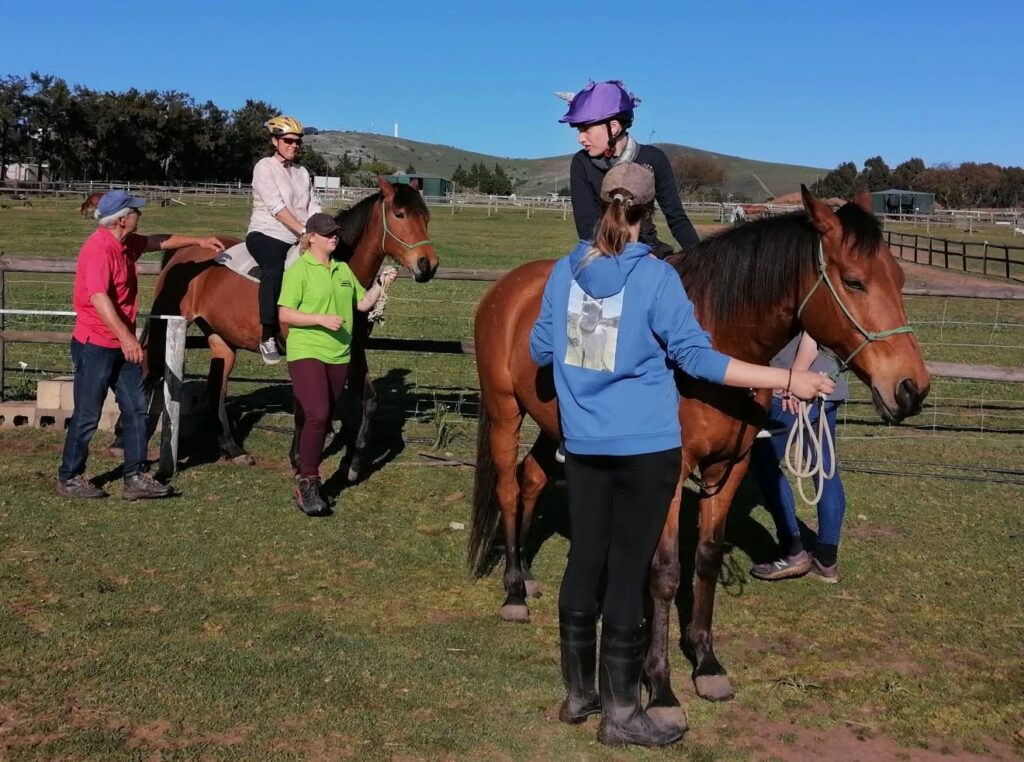
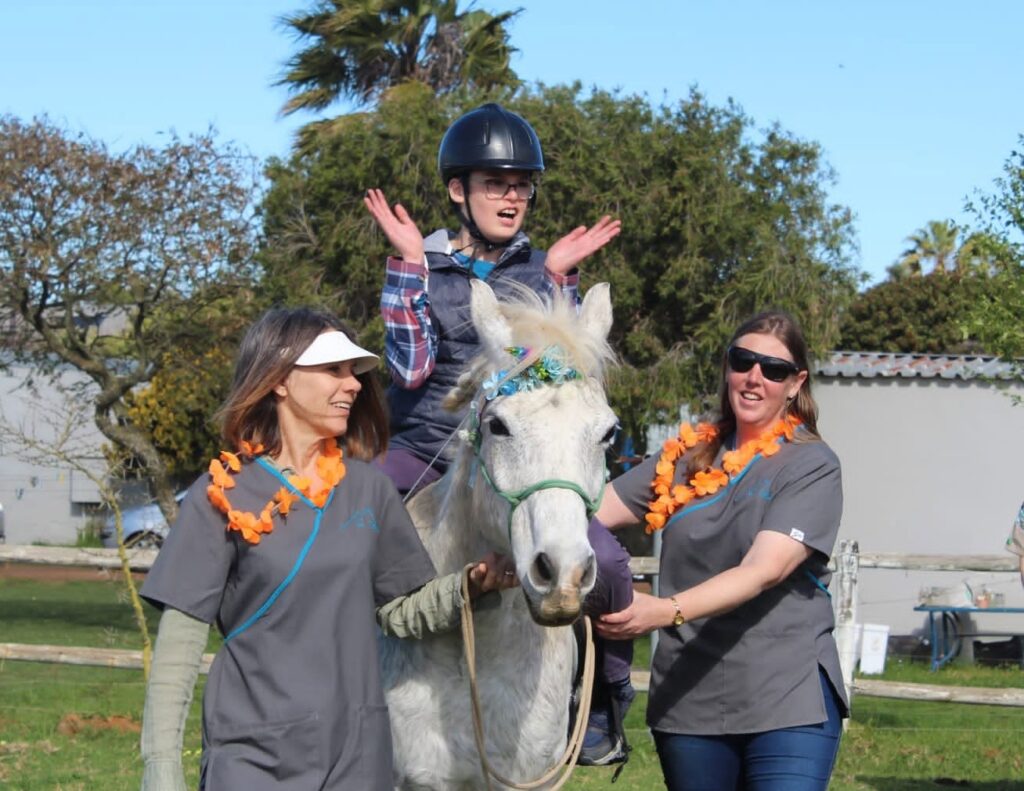
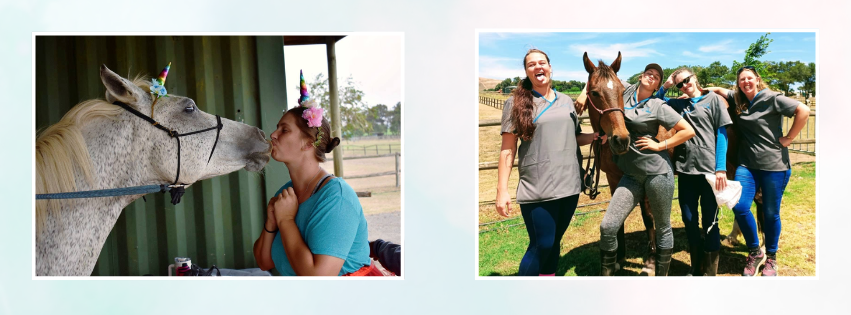
Hippotherapy offers a different and highly engaging environment in which therapy can take place.
The term “hippotherapy” comes from the Greek word hippos, meaning horse. It describes the purposeful use of a horse’s movement as a treatment strategy within an individual therapy programme.
At Speak 2 Me, the horse and surrounding environment become part of the therapeutic process. Activities are selected according to the individual’s abilities, communication needs and functional goals.
Hippotherapy is not a horse-riding lesson. The aim is not to teach the individual how to ride independently. Instead, the horse’s movement and the experience of interacting within the equine environment are used to support specific therapy goals.
How Hippotherapy Works
The rhythmic, repetitive and multidimensional movement of a walking horse provides ongoing movement and sensory input. The individual must respond and adjust to this movement throughout the session.
This creates opportunities to work on areas that may contribute to everyday functioning, such as:
- Postural awareness and control
- Balance and coordination
- Body awareness
- Attention and engagement
- Sensory processing and regulation
- Planning and responding
- Confidence and participation
- Communication and social interaction
The movement and environment are used purposefully. The activities selected during a session will depend on what the individual needs and what the therapist is working towards.
Communication in a Natural Environment
The equine environment provides many natural reasons to communicate.
During a session, the individual may have opportunities to:
- Make choices
- Request an activity or object
- Indicate “start”, “stop”, “more” or “finished”
- Follow and give instructions
- Answer or ask questions
- Comment on what is happening
- Practise turn-taking
- Use symbols, gestures, speech or an AAC system
- Interact with the therapist and other members of the support team
These communication opportunities form part of a meaningful activity rather than a repetitive tabletop exercise.
AAC users can be supported in using their communication boards, books or devices during appropriate parts of the session. Vocabulary and layouts may also be adapted to include words needed around the horse, activities, equipment, feelings, choices and safety.
Supporting the Foundations of Communication
Communication depends on more than speech or language alone. An individual may find it difficult to communicate when they are struggling to regulate sensory input, maintain their posture, remain attentive or organise a response.
Hippotherapy may be incorporated into therapy to support some of these underlying areas while communication goals are addressed.
Depending on the individual, therapy may focus on:
- Becoming calm, alert and ready to participate
- Maintaining attention during an activity
- Improving awareness of the body and surrounding environment
- Building confidence when trying something unfamiliar
- Initiating interaction
- Responding to another person
- Making meaningful choices
- Using a communication system during an active experience
- Carrying skills developed during sessions into daily life
The intended outcomes remain functional. The purpose is to support skills that can help the person communicate and participate more effectively away from the horse as well.
A Person-Centred Approach
Every individual responds differently to horses, movement and outdoor environments. Hippotherapy is therefore not approached as a standard programme that is identical for everyone.
Before it is included in a therapy plan, Sonja will consider the individual’s:
- Communication needs
- Physical abilities
- Seating and positioning
- Sensory preferences
- Attention and regulation
- Medical and developmental history
- Previous experience around animals
- Comfort within the equine environment
- Personal interests and therapy goals
- Support requirements
Some individuals may respond positively to the horse’s movement, while others may initially benefit from activities taking place near the horse or within the broader equine environment.
The individual is not forced to ride or interact beyond what is appropriate for them. Trust, comfort and familiarity can be developed gradually.
Who May Benefit?
Hippotherapy may be considered for children, teenagers or adults with communication, developmental, sensory, movement or participation needs.
This may include individuals experiencing:
- Speech and language difficulties
- Developmental delays
- Autism or sensory-processing differences
- Physical or movement challenges
- Difficulty with attention or regulation
- Limited confidence in unfamiliar activities
- Challenges using communication skills in active environments
- Difficulty participating in conventional seated therapy
Having one of these needs does not automatically mean that hippotherapy will be appropriate. Suitability must be considered individually, taking the person’s health, safety, abilities and therapy goals into account.
What Happens During a Session?
The structure of each session will depend on the individual and the goals being addressed.
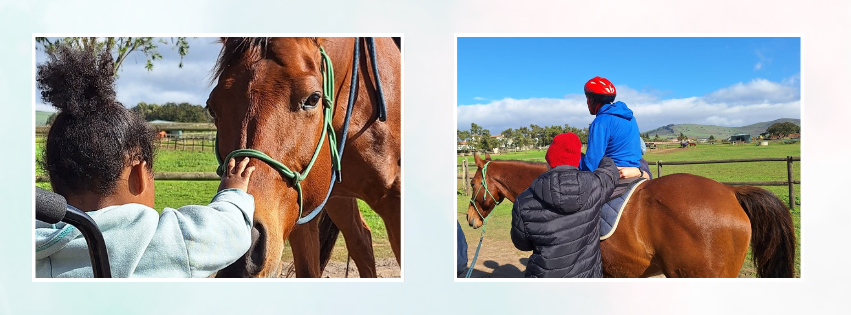
A session may include preparation, interaction with the horse, mounted or unmounted activities, communication tasks and time to transition away from the activity.
Activities may involve:
- Choosing between objects or activities
- Giving instructions
- Using AAC vocabulary in context
- Identifying or naming equipment
- Reaching for or placing objects
- Following a sequence
- Responding to changes in movement
- Taking turns
- Communicating preferences
- Participating in simple horse-care activities where appropriate
The horse is not simply present as a reward or background feature. Its movement and the equine environment are deliberately incorporated into the therapeutic activity.
Safety and Suitability
Hippotherapy involves both people and animals, so safety and suitability are essential.
Before sessions begin, Sonja will discuss any relevant medical, physical, sensory or behavioural considerations with the individual or family. Additional information or medical clearance may be requested where necessary.
Not every individual will be a suitable candidate for mounted activities. The type of support required, the available environment and the individual’s comfort around horses will all influence whether and how hippotherapy can be included.
Practical expectations, clothing, safety equipment and participation requirements will be explained before the first session.
Family and Carer Involvement
As with all Speak 2 Me services, communication is not treated in isolation.
Parents, family members and carers may be included so that they understand the goals being addressed and how skills developed during hippotherapy can be encouraged in everyday environments.
Feedback may include:
- Communication strategies that worked during the session
- New vocabulary to add to an AAC system
- Activities that encouraged engagement
- Ways to create similar communication opportunities at home
- Progress towards individual therapy goals
- Recommendations for follow-up support
The aim is not for progress to remain within the hippotherapy session. Skills should, wherever possible, contribute to greater communication and participation in the individual’s daily life.
Therapy With Meaning and Movement
For some individuals, the movement, sensory experience and connection offered by the equine environment can create a powerful opportunity for engagement.
Speak 2 Me uses hippotherapy as part of a thoughtful, individualised therapy plan—helping the person work towards meaningful communication, functional participation and greater confidence in an environment that feels active, motivating and connected.